AI-Generated Music Enters Mainstream as Artists and Labels Adopt Algorithmic Composition
AI-generated music is entering the mainstream as artists and labels adopt algorithmic composition and AI-assisted production.
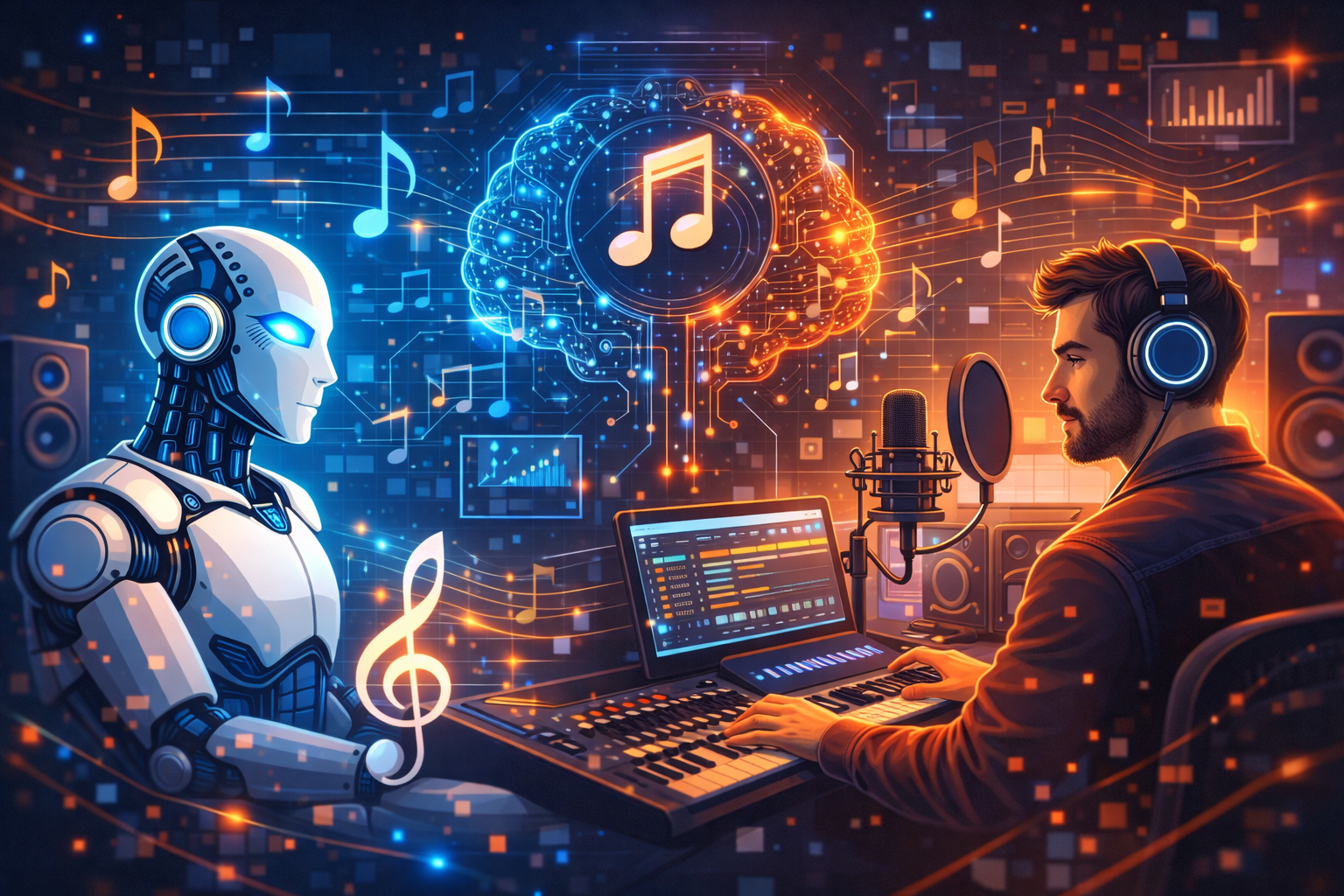
Artificial intelligence is rapidly reshaping the music industry as AI-generated compositions move from experimental projects into mainstream production. Music labels, independent artists, and streaming platforms are increasingly adopting AI tools to assist with songwriting, composition, sound design, and even vocal generation.
Modern music AI systems are trained on vast libraries of melodies, rhythms, harmonies, and production styles. These models can analyze musical patterns and generate original compositions that span genres such as pop, electronic, classical, hip-hop, and ambient music. Artists are using AI as a creative collaborator, generating song ideas, chord progressions, and instrumental layers that can be refined and personalized.
Several major labels are experimenting with AI-assisted production to speed up workflows and reduce costs. AI tools can now create background scores for films, games, and advertisements within minutes, significantly shortening production timelines. In some cases, AI-generated demos are being used as the foundation for chart-ready tracks.
The rise of AI music has also sparked debate around originality, copyright, and artist compensation. Industry stakeholders are working to establish frameworks that ensure ethical training practices, transparency in AI-generated content, and fair revenue sharing. Some platforms are introducing clear labeling to distinguish AI-assisted and fully AI-generated music.
Listeners, meanwhile, are showing growing acceptance of AI-created tracks, particularly in genres focused on mood and productivity, such as lo-fi, ambient, and cinematic soundscapes. Streaming data suggests that audiences are more interested in how music makes them feel than how it was created.
Experts predict that AI will not replace human musicians but will instead become a standard part of the creative toolkit. As technology continues to evolve, the future of music is expected to be shaped by collaboration between human creativity and intelligent algorithms.