AI Agents Begin Replacing Traditional Software Workflows Across Enterprises
Enterprises are rapidly adopting AI agents to replace traditional software workflows, improving efficiency and automation across industries.
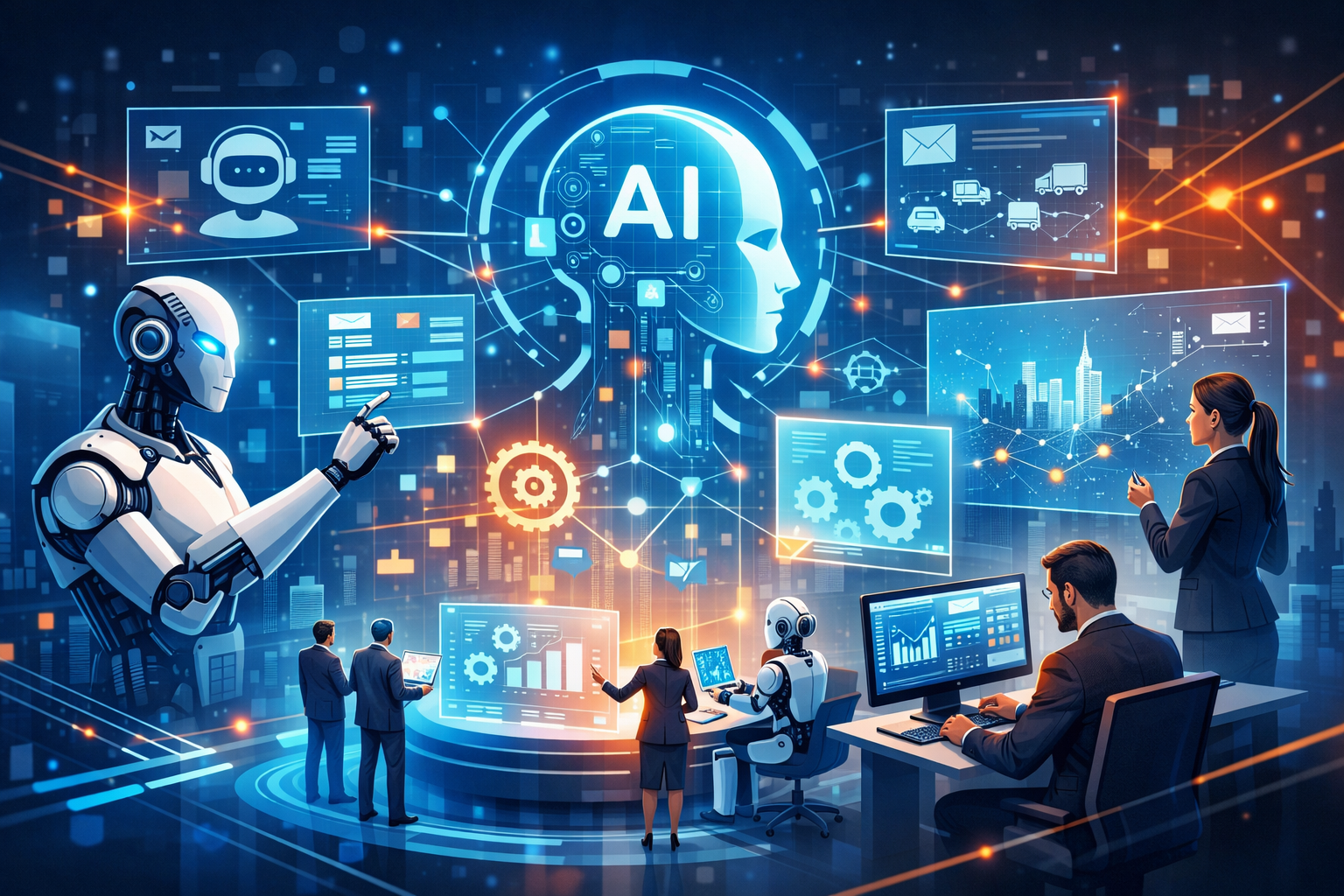
Artificial intelligence is entering a new phase as enterprises increasingly adopt autonomous AI agents to handle complex workflows that were previously managed by traditional software systems. These AI agents are capable of understanding objectives, breaking tasks into steps, interacting with multiple tools, and continuously learning from outcomes.
Large organizations across finance, logistics, marketing, and customer support are piloting AI agents to automate processes such as report generation, supply chain forecasting, customer query resolution, and internal data analysis. Unlike conventional software, which requires predefined rules and rigid logic, AI agents operate with contextual reasoning and adaptive decision-making.
Industry leaders report that early deployments have reduced operational costs, improved turnaround times, and minimized human error. In some cases, teams that once required multiple software platforms are now relying on a single AI-driven system capable of coordinating tasks across departments.
However, the transition is not without challenges. Experts warn that governance, transparency, and security must be prioritized as AI agents gain greater autonomy. Enterprises are investing heavily in monitoring systems to ensure that AI-driven decisions remain aligned with business objectives and regulatory requirements.
Despite concerns, analysts believe AI agents represent a fundamental shift in how digital work is performed. As models become more reliable and explainable, AI agents are expected to move from experimental tools to core infrastructure, reshaping enterprise software landscapes over the next few years.